
Defining the Work
Information is THE medium

My excitement for DJing has been renewed recently and there have been some new subscribers. Welcome and thank you for your support, especially if you have shown love in person at any of my recent sets. Here are a couple of gigs coming up. I will also be on The Lot Radio at 10am EST this morning, sharing thoughts and tunes.
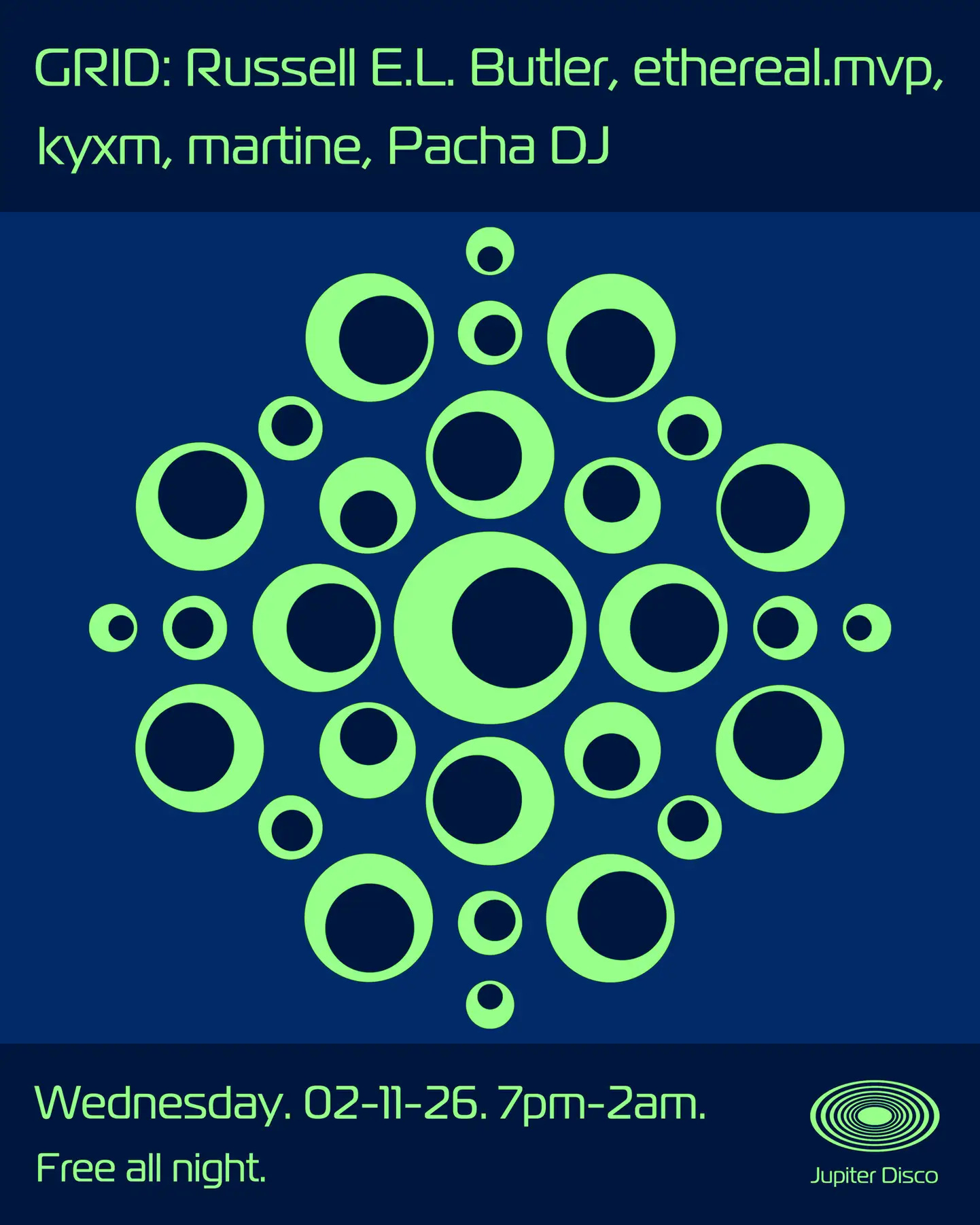
A lovely, free, Wednesday set at Jupiter Disco, playing for the GRID crew for the first time.
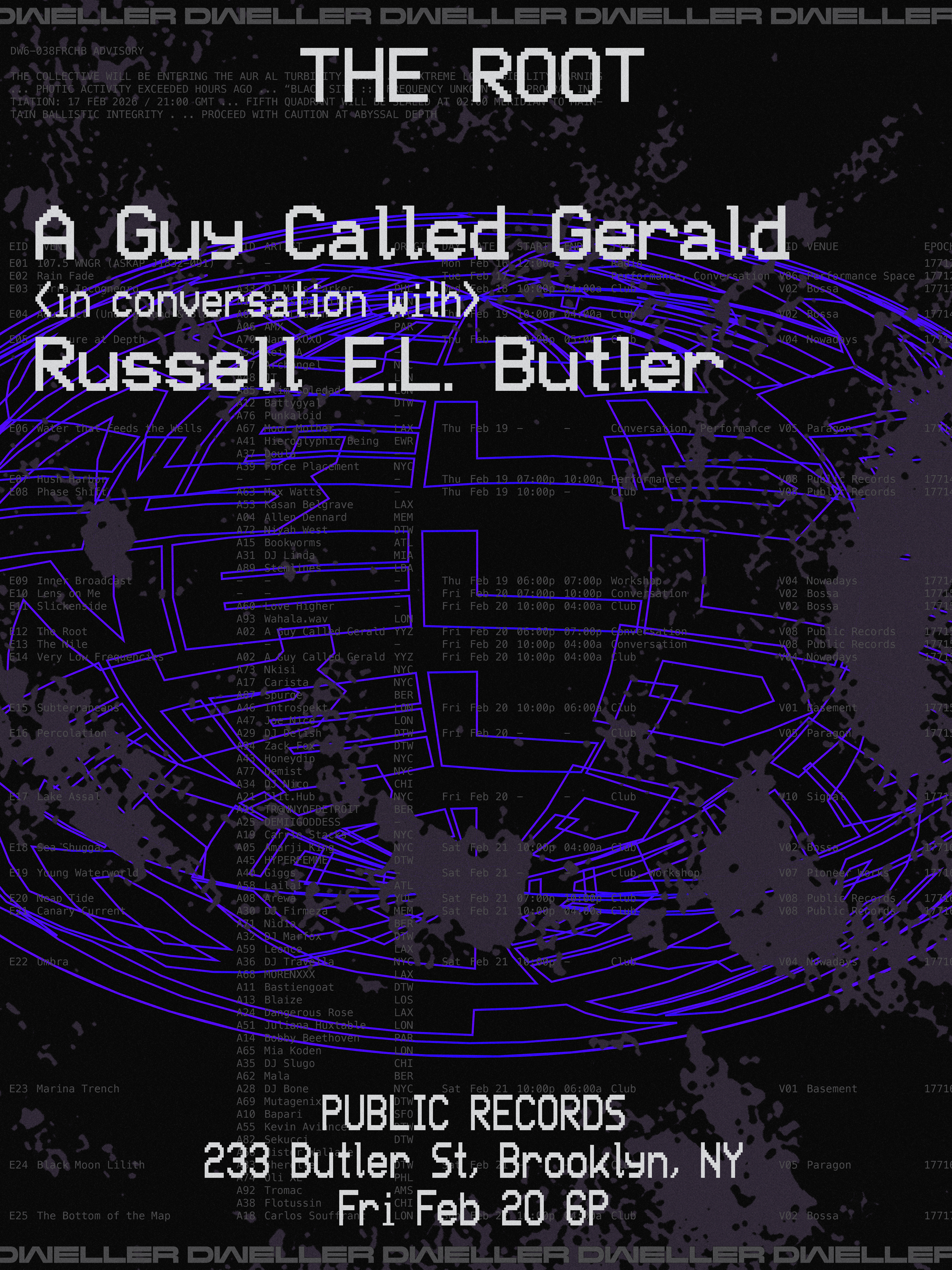
On February 21st, I will fly to Columbus, Ohio, and play a Techno set for the Cybershock crew.
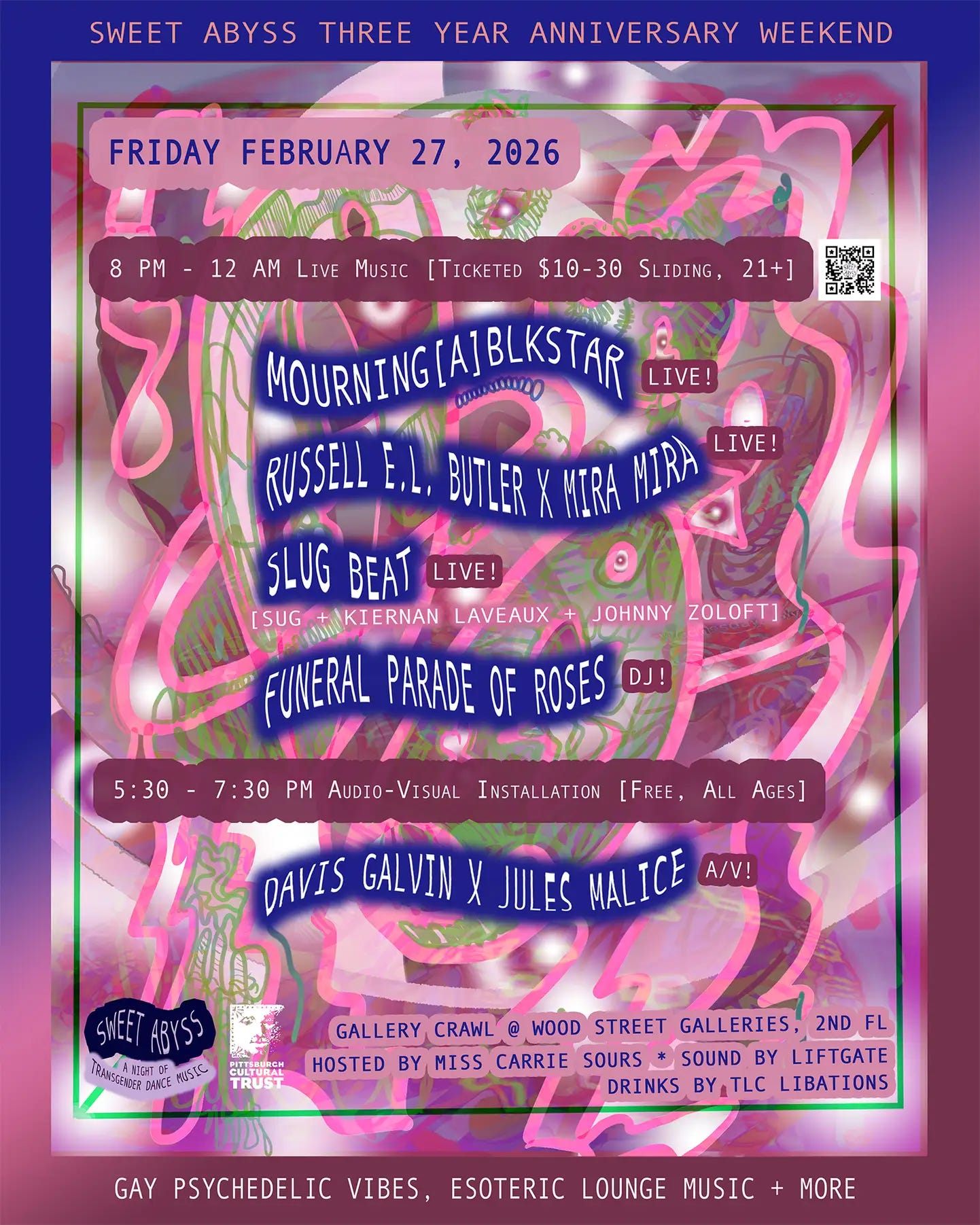
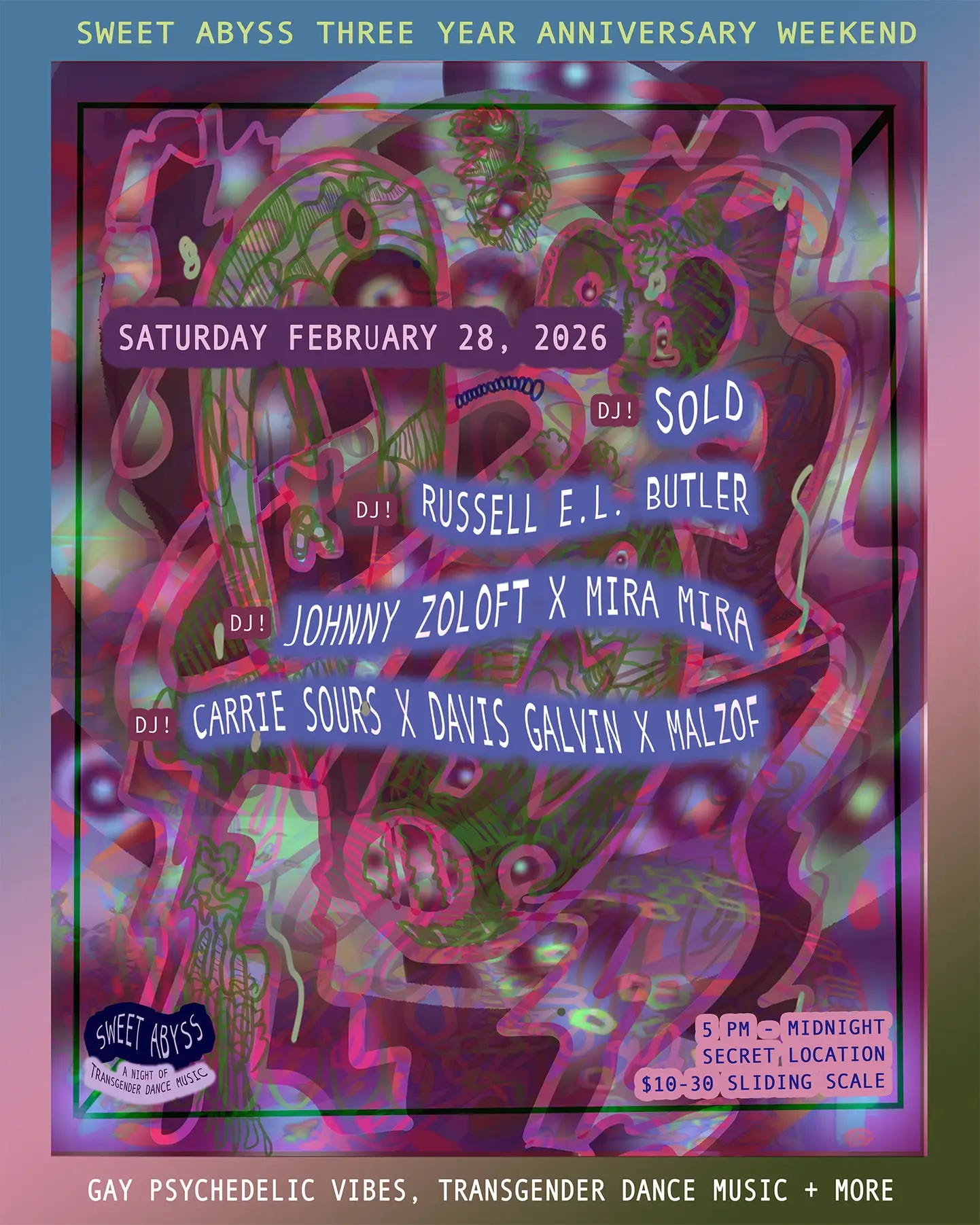
The next evening will be a fun party with many great DJs.
Much more to come in March and April, including my debut in Montreal, as well as the first Boyz II Them set of the year. Let’s lock in. I’ll see you out there. On to the entry.
A few months ago, I submitted an application to a prestigious residency program. It has been some time since I have submitted such an application and though my work is situated at the intersection of the fine/conceptual art world and the world of musics experimental and otherwise, I have never compiled a CV and I had not articulated the motivations of my work in the form of an artist’s statement. I did not get the residency, but I at least regained some confidence in what I have done (the CV) as well as a synthesis of what my work amounts to (the artist statement).
Rather than be intimidated by the thick smokey walls of my sparse recollections of the last 16+ years, I chose to focus on the last 7, in order to document a selection of my most “noteworthy” performances, group shows, and special projects that amount to the most attractive presentation of my work.
My artist statement
“Sufferation”
Sufferation, a Jamaican patois, summates the ongoing oppression and subsequent resistance movements that the African diaspora is subjected to and participates in. The experimental studio process known as Dub is an archival creative process that documents the cultural expressions that arise from sufferation. The Dub process utilizes recorded material as a means of instrumentation. Recorded material is re-mixed to create new works, cultural expressions, and compositional techniques. This echoing feedback loop is an iterative process that reflects the survival techniques that arise from sufferation. The Dub process is a mourning ritual that honors the ongoing struggles of the African diaspora by illustrating that an archive can be used to document, but also to create and inquire.
My work is motivated by this Dub process and I explore it through performances, sound works, radio productions, poems, and essays.
My debut album, God is Change (2015), interpreted the Parable works of Octavia E. Butler, interpolating the books’ coping strategies and survivalist techniques into Techno manifestations. I followed this project with The Home That I’d Build for Myself and All of My Friends (2018). This album acts as a ritual of mourning in the aftermath of the 2016 Ghost Ship Fire. My track James Stinson on a Beach in the Mid-Atlantic (2019) riffs on the myth that Tupac is alive in Cuba and honors the work of the late James Stinson, one half of Detroit Techno project, Drexciya.
My work applies the Dub process to reckon with archives and memories of survival. My work attempts to explore and develop practices that activate the lives of our ancestors. The Dub process is a means of discernment used to uncover what may be obscured. My work led to an opportunity to collaborate with Theaster Gates, as the Digital Archivist for Gates’ work A Song For Frankie (2021). I was tasked with documenting the remaining record collection of House Music pioneer, Frankie Knuckles. This installation functioned as a monument to the contributions of the celebrated DJ and Producer, but it also became a wake for those that knew Frankie well. The conversations that I facilitated during this installation, laid a new foundation that grounded my work further in its relationship to archives and iterative processes.
I applied the techniques and sonic architecture of Dub and House Music to my album Call Me G (2023) and its accompanying poem Accumulation (2023). This album addresses how the Dub process can be applied to investigate questions of gender, situating my own body as a living archive. In 2023, I established Deep Exposure, a radio show, party, and newsletter that applies deep listening techniques to the Dub process, encouraging listeners to establish their own practices of introspection and inquiry. I seek to further my work with events that support communities of inquiry and create collaborative sound works that further explore the dub process.
The articulation of this work, was challenging, but rewarding in its own right. I have sensed that there is a common thread throughout my work, first, as a student and then into the established disorder of my adulthood. Though the surface of my work may present itself as confusing to the incurious, the artist’s statement tasked me with inviting the chin scratching formal essentialist to look further into this work. Work which I define as social practice, performance, and sound, in institutional contemporary art terms. For the sake of art world intelligibility, or rather art exchange marketability, I have acted as the curator of the lives I have led. I am presenting plinth-ready sonic objects that shake and shudder the gallery walls. By defining my work in such terms, I have encapsulated a means of cultural production into a wall text to be nodded at or passed by within a series of white, digital, hallways. I celebrate for a moment. Opening my ears to the air rippling with the presence of products manifest. Though the sound is heavy as it feels that I have brought death to my work, curtailing its reaches. I feel invited to further extend the life span of the works and their routes of meaning, so I hope that this essay helps the work break from the institutional constraints that reckon my work into intelligibility and that you will join me in allowing their musics to phase on top of one another and create pockets of empty, corpulent, form.
I think of conversations with other art workers that I have had, producers, DJs, talent buyers, painters, and photographers. I think of their admissions, that they have not thought to articulate their work, that they do not consider the why of the tools that they implement. I hear us debate about how the success of the art work is determined. Is a work’s success determined by the completion and presentation of the work without regard for the tools and processes utilized? A writer’s use of a pen or a DJs use of a recording are inevitabilities. The tools that they use infer the objects that they create. They submit themselves to a complete product, presented without intervention. So why question the color of the pen or the form of the recorded media? Why would they determine a difference in interpretation if the words on the paper or the amplified sound in a room of dancers are the proof of the presentation of a creative work? To demonstrate ways that I have attempted to answer these questions, I will turn to two pieces, my track on the Paul St. Hilaire album, With Producers, and my 2023 performance, How to DJ, at 601artspace in New York’s Chinatown.
In the summer of 2023, I was invited to lunch by my friend Richard Akingbehin, the owner of Kynant Records and one of the founders of Refuge Worldwide. I was quite frustrated and depressed at the time. I felt as though touring in Europe was grinding me into paste, stripping my work of color and binding it into a compound that could prop up artists that don’t face the kinds of marginalizations that soften the edges of my expressions. Richard had been working with Paul St. Hilaire, aka Tikiman, for some time at this point. He reached out an open palm so to speak and said something like “Paul is always looking for new artists to collaborate with. Feel free to send me anything you’re working on if you think it would make a good collaboration.”
I was quite taken aback by this offer. Honestly, it filled me with fear and dread. I was in a place that was so anxious, paranoid, insecure, and self-deprecating that I couldn’t believe that I was worthy enough to work with one of my favorite artists. Even so, in the moment, I said “I’d love to”, but I filed it at the back of my mind, excusing myself from any hard work or disappointment. We finished lunch and parted ways. At the end of that tour I had two important conversations that led me to divest my time and efforts from the European DJ Industrial Complex. I returned to Europe one more time a month later and haven’t looked back. I regret nothing about that decision. I had a very intense period of reflection after “giving up” on a dream that I had held for most of my life. “Now what?” I repeated.
I heard from Richard again, I believe in late September of 2023. He was following up on his offer to work with Paul. He had a more focused project in mind, an album where each track is made by different producers. He mentioned some of the names that would appear, and I tensed up. How could he place me in the same class as these artists that I so respected? Rather than ask, I said I’d get right to it. I spent two days making three tracks and hurriedly sent them along before I could think too hard about them. Paul made his selection a couple of months later and I included the tracks that he passed on in my Constructions Vol 3 release.
I waited. I checked in. And I waited…
The same month, curator Sophie Landres, asked me to participate in her group show at 601artspace, Spinning in Place. She asked me to respond to works in the show with an event, similar to my Deep Exposure Lot Radio show. As Deep Exposure is about articulating a connection to recorded sound as a means of building relationships, I created an interactive experience with the tongue in cheek title, How to DJ. Here is the copy that I wrote for the event.
How to DJ is an experimental performance investigating the artistic form of musical programming, known in radio and the night life space as DJing. In this performance Russell E.L. Butler engages with records in their collection spanning time, space and place. They will play music from vinyl records, tell stories, and open up discussions related to the records they play.
How to DJ is not an attempt to elevate the form of DJing, but rather to ground it further in its social practices. These musics are not easily summed up by singular words. Rather than allowing genre to dictate the progression of this musical presentation, Russell utilizes personal and historical anecdotes to encourage participants to create their own language around these musical forms. Russell borrows from her experience as an audio engineer, as well as, some of the exercises present in Pauline Olivero’s Deep Listening, in order to create a system of feedback with the audience; a closed loop for the duration of the performance. The participant is the performer, the administrator of the performance is the participant.
What is DJing, if not relationships negotiated between artist, institution, and audience? This performance responds to the rotational, revolutionary, and cyclic elements addressed by Spinning In Place. The turntable is symbolic of a fixed kinetic environment that appears to progress through linear time, though it’s motion will be repeated, this process beginning anew. A record ends, another appears to take its place, reifying the confines of this closed system.
During the event, I presented records that speak to the materials that make up their compositional structure. These materials are the instruments, the recording equipment, as well as previously recorded material. I used these records to tell stories about my relationship with music, as well as, to engage the attendees in conversation regarding the music and the ideas and experiences that they relate to.
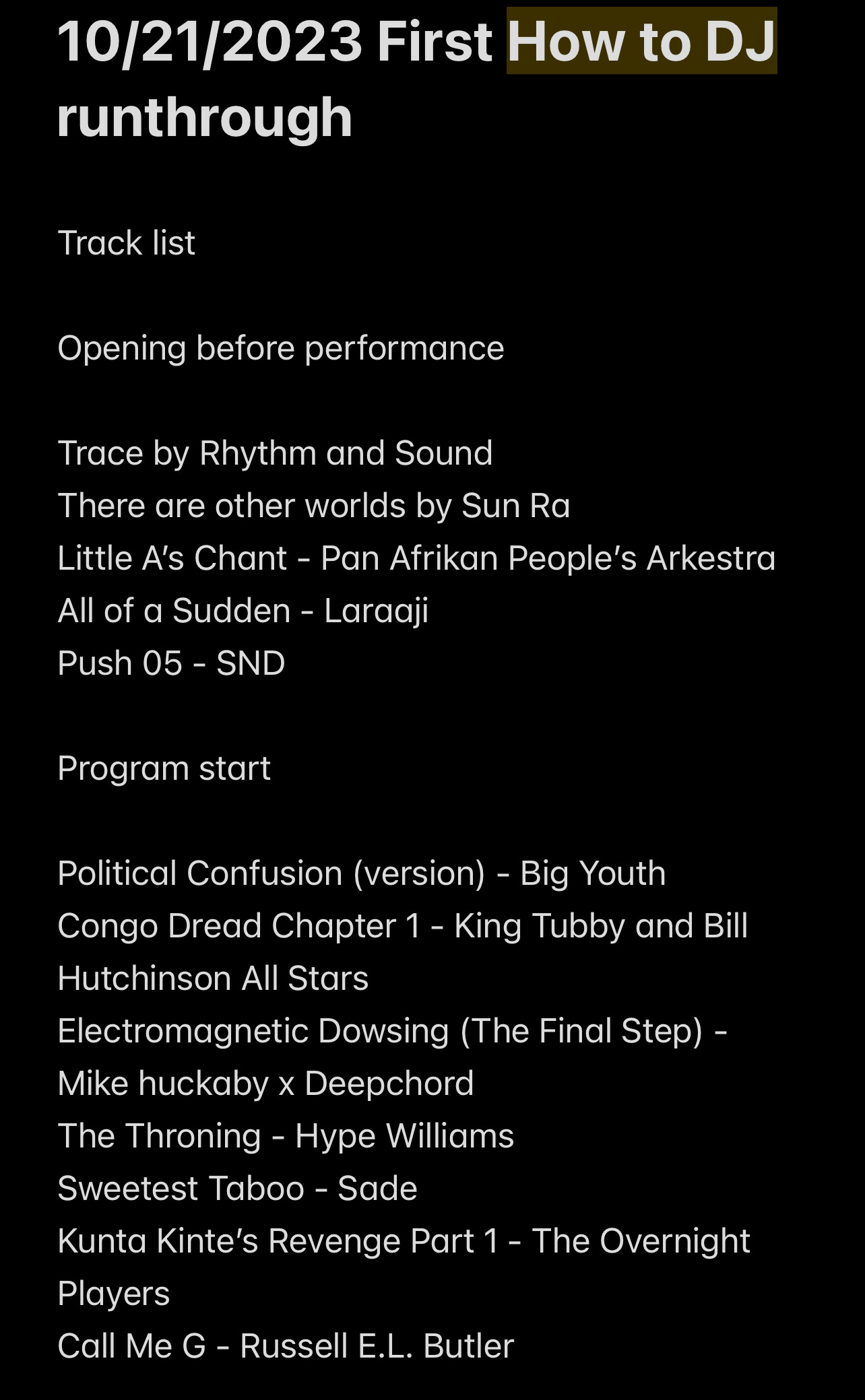
After each song I would ask “What did we hear?”
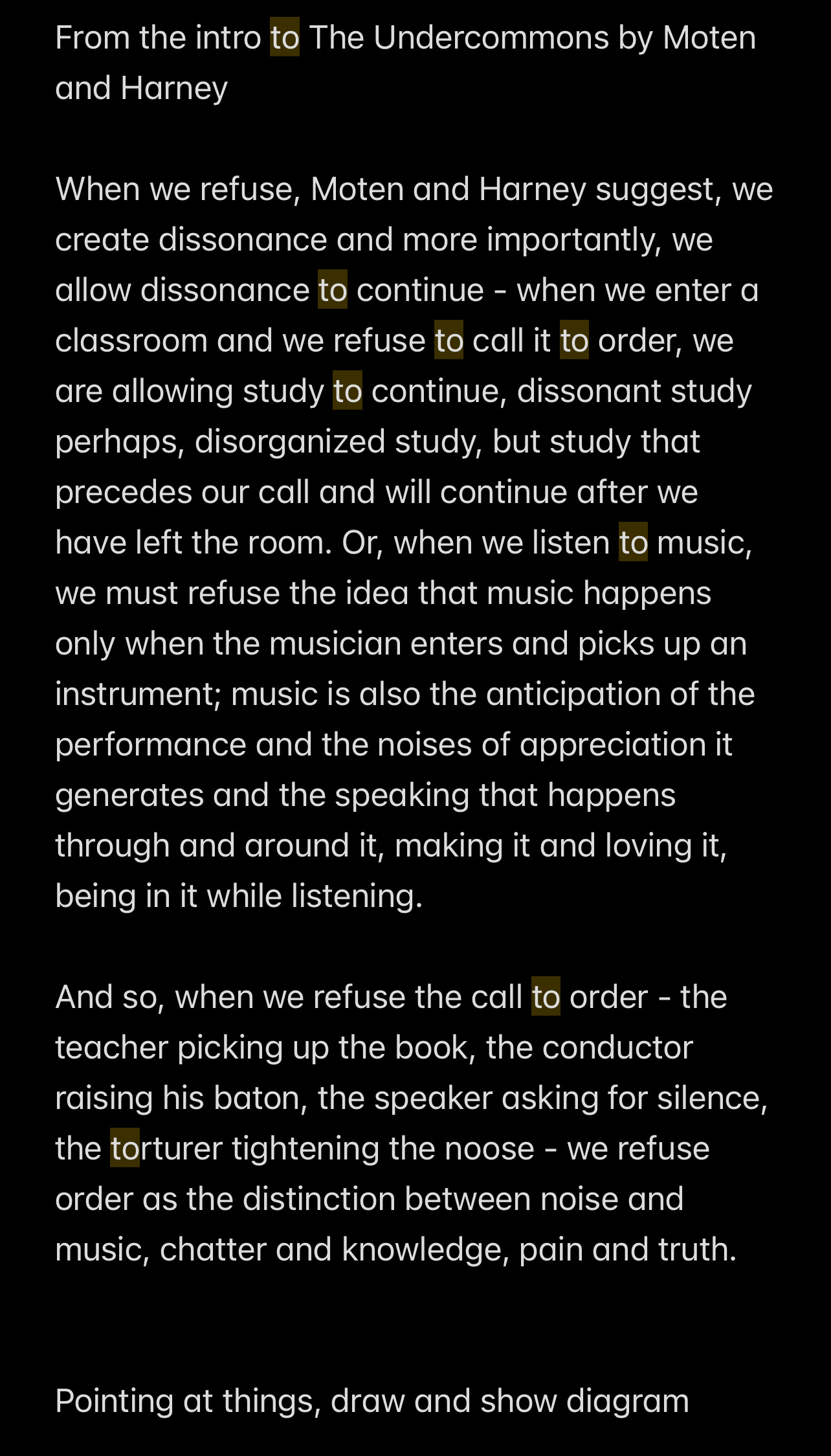
By identifying the elements that make up these songs, we could form a common context and language for engaging with the songs for the duration of the performance. We could lay bare the structure of these mediums and create a work that’s materials are speech, conversation, listening, and analysis. We forged a route towards meaning via a form of intentional, mutual exchange. The records were the catalyzing spark that would heat the forge in our workshop. Present within the record was a new object, hammered into being by that temporary social engagement.
On my 39th birthday, March 31st, 2025. Richard DM’d me. He said, “I have something for you.” It was Paul’s vocal. A man that I never met, whose work I celebrate, encapsulated the moment that I inhabited. I am quite a politically oriented person (news to some of you, I know). Paul’s lyrics, vocal processing, and sparse arrangement made me feel as though he was looking me dead in the face and saying “Yes, you understand.” Though esoteric in rhythm and atonal in melody, he was able to see me, feel me, understand me from afar. This collaboration unearthed the relation between form and concept. Our disembodied articulation was unified by the studio process in which the materials that I used, met the materials that he used. We arrived at a common understanding because the materials that I provided, that laid the foundation of the track, implied the meaning that he would arrive at with his words.
I used the Elektron Octatrack sampler, the Erica Synths x Sonic Potions LXR-02 digital drum synth, and the Argon M8 wavetable synthesizer to make this track. Most of the instrumentation is made up of samples that I made using the drum machine and the synth, manipulating them in the sampler to change pitch and add effects. I took recorded material and interpolated it into new sounds that helped dictate the arrangement. I dubbed it, Paul dubbed it further. It was all mixed down in Logic X.
These two works are demonstrations of how meaning hides behind materials and that through interpretative and social processes, meaning is exposed. Meaning then transforms into a new material as the result of its interpretation and we can exploit that meaning to create new works. I have referred to this in prior entries. This dub process and the articulation presented in my artist statement infer that behind each modern method of creation, there is a new work, a new suffering, and a means through which we can cope.
So I invite you to inject intent and meaning into what you make. Take some time to ask yourself and your work and those around you, what does this mean? Why do I feel that way? Why does the presentation of this work through these materials matter?
When you make with intent, when you ask the work these questions, you consent to the responsibility that arises with the creative act.
Thanks for making it this far. I hope it helped.